
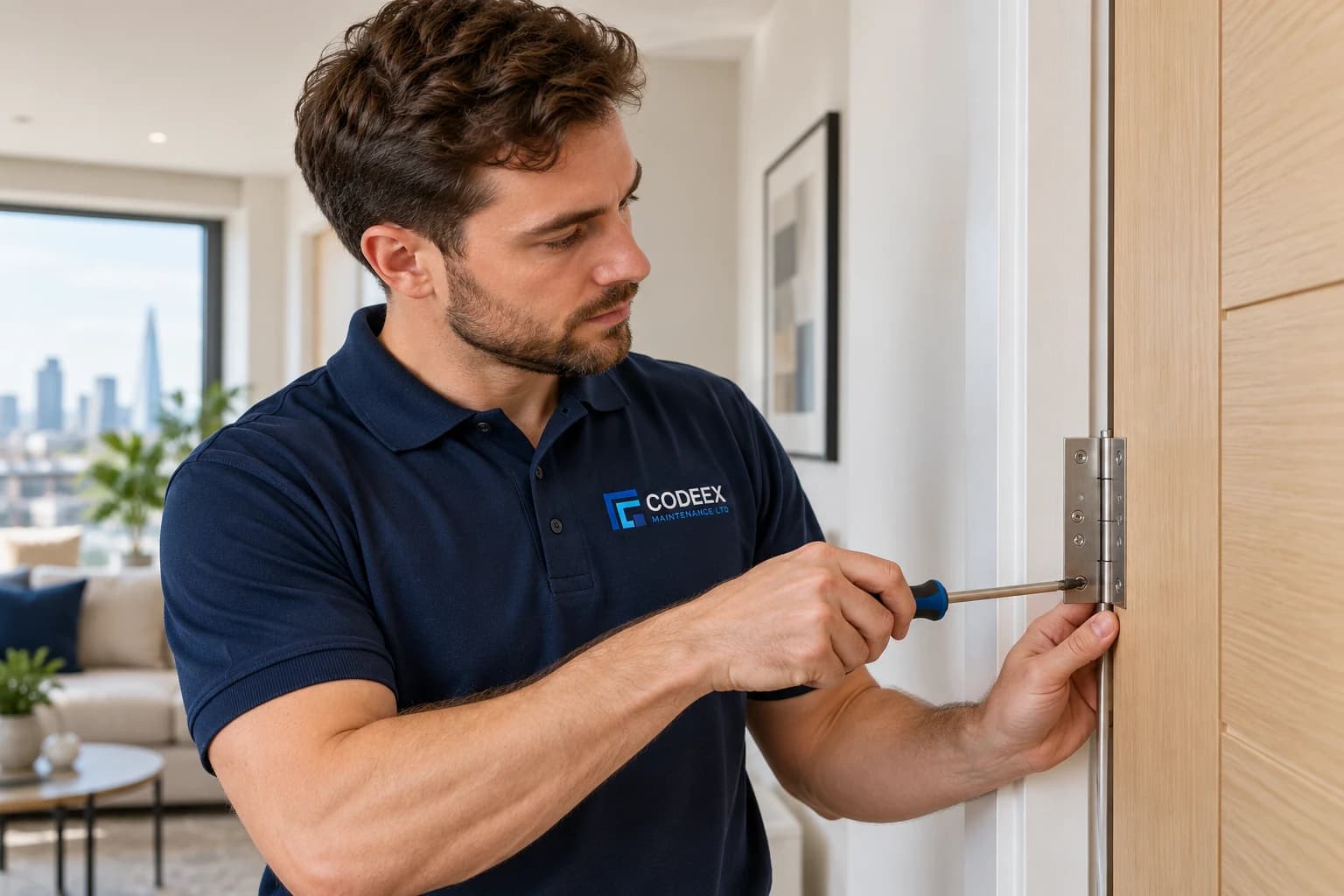
A small defect can be straightforward to describe badly and surprisingly useful to describe well. Before booking a visit, identify the location, what has changed and the result you need. These five common enquiries show how to build a better repair brief.
1. Doors that catch or do not close properly
Explain whether the door catches at the top, side or floor, and whether the problem is recent. Include photographs of the door, frame and relevant fittings. Mention recent flooring or decorating work where relevant. A door adjustment, damaged frame and defective lock are different requirements, so the assessment should establish the cause before a particular repair is promised.
2. Cracked, marked or deteriorating decoration
Show the whole surface as well as the damaged area. Record whether the mark has returned after an earlier repair or follows a known leak. Decoration can address an agreed finish, but it should not conceal an unresolved underlying defect. Include the room, approximate area and desired coating so preparation and finishing can be assessed together.
3. Loose shelves, handles or other fittings
Identify the product and intended use, with photographs of existing mounting points where safe. Tell the office if the fitting is damaged or has pulled away from the surface. Do not keep loading an unstable item while waiting for advice. The work may involve the product, the fixings or the substrate; replacing a screw alone should not be assumed to solve it.
4. Water-related damage or a reported leak
Record where water is visible, when it appears and any affected adjacent finishes, without disturbing electrical equipment or concealed services. Use the appropriate urgent reporting route if the situation is active or unsafe. Investigation, plumbing repairs, drying and decorative making good are separate stages that may need different people and an agreed sequence.
5. Furniture that needs assembly or adjustment
Share the exact model, instructions and whether it is new, partly assembled or already in use. Include photographs of missing parts, damage or the issue reported. Moving a large item, rebuilding it and attaching it to a wall are separate considerations. Describe access and the intended position so the enquiry reflects the full job rather than its simplest label.
Group related tasks into one list, but keep each item's location and priority visible. For CODEEX, include the postcode, photographs, quantities, access arrangements and any previous repair information. We can review the appropriate trade requirements and discuss scope and next steps before an appointment is agreed.
Services and pages mentioned in this guide